| PAINTING IN THAILAND | |
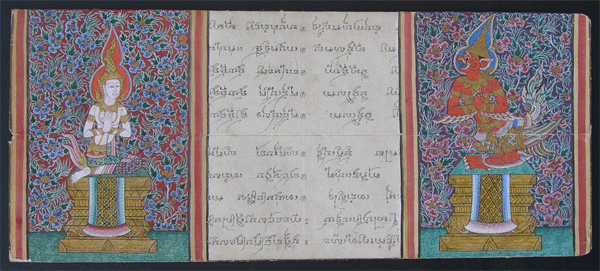 | |
| Even if the tend to limit the history of classical painting in Thailand to the period of six centuries extending from the Sokhotai Kingdom to the western influenced Ratanakosin period, its study cannot be limited to the description of the most frequent subjects or to the analysis of a definite manner. Painting and graphic are two traditional techniques by Thai artist, but it should be clearly stated that they are not partitioned as in the western arts. In the West, due to the separation maintained between these two techniques, the art of lacquer has always been regarded as a decorative technique and could never attain the status of a major art form. In Thailand however, the role given to a painting in general blends in the same didactic intentions the different techniques of lacquer and mural painting. And since there is no real partition between techniques, since the artists work on the same subjects, there is no real urge to describe the techniques for themselves. The various techniques may compel us to several adaptations, but the works show the same original vision, a common attitude towards nature, also recognizable in the literary works. It was often said and written that Thai painting was influenced by the theatre, but it is only partly true. If the knowledge of the traditional theatrical gestures helps to understand the meaning of the painted scenes, we must not forget that both theater and painting used literary sources and tended to express in a pictural manner a poetical sense of reality. In spite of its diversity, art in Thailand show and exceptional unity due less to the common subjects than to a common feeling and a common manner of translating the subjects. The sharp observation and the peculiar sense of atmosphere mixed here allow us to visualize the meeting of every day people, gods and many other characters created by the surrealistically inclined imagination of the Thais. To se theses figures mostly influenced by Indian myths in a visual landscape adapted to the decorative purpose of the typical Thai art forms, the artists created their own action-centered laws of perspective. This manner was however forced to decline during the more and more western influenced XIXth century. The western public often finds it difficult to relate to the scenes depicted in the Thai visual arts, mostly because they remain incomprehensive if one cannot read the text they illustrate. Thai painting is never gratuitous; every detail is carefully thought of and purposely meaningful. Where a newcomer only sees stiff figures frozen in conventional postures, the lover of Thai art will automatically recognize the heroes of a particular Jakata or a passage of the Buddha's life. Seen from the outside these “obscure” scenes do not easily ravish us like they obviously do the Thai public accustomed by the oral tradition, dance and theatre, to the meaning of the different symbols. From the beginning, painting in Thailand had an educational purpose; a short text was always added to conjure every form of ambiguity that could distort the interpretation. PARTICULARS TECHNICS Manuscript | |
| THAI RAMAYANA PAINTINGS FROM THE RATTANAKOSIN PERIOD (early 20th Century) | |
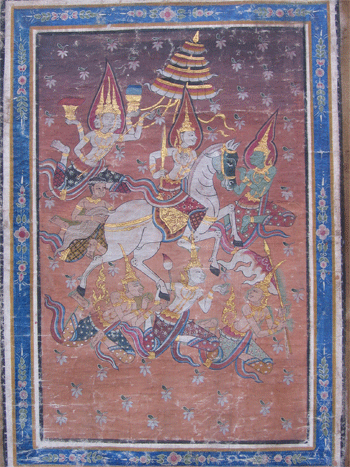 click on the image to see this collection | |
| FRESCOS (MURALS) FROM AROUND 1950's | |
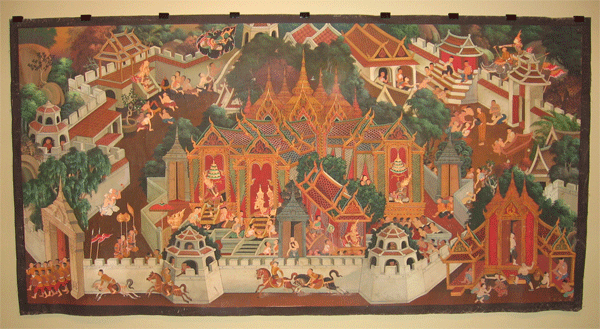 click on the image to see this collection |
Main - Page 1 - Page 2 - Page 3 - Page 4 - Frescos (murals)
For more information about the paintings, please contact Diane Garant at diane.garant <at> gmail.com.
The paintings are located in Quebec City, Qc, Canada. They are sold unframed.